

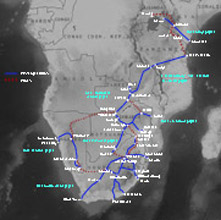
Taking the train around Zim...
Trains link Victoria Falls, Bulawayo, Harare and various other cities. Not only a way to get around, they're an adventure and travel bargain too.

Useful country information
Bulawayo to Victoria Falls by train
This classic overnight train is the way to reach Vic Falls from Bulawayo, even though (given Zim's economic situation) it's now getting very down-at-heel. But don't be put off, ignore anyone telling you to spend a night in a cramped bus seat (or worse, fly), don't miss this amazing rail travel adventure, a classic piece of history with British-built coaches with interiors from 1958. You may even see some wildlife. If you have any updates about this train, please email me.
UPDATE 2026: Passenger trains in Zim were suspended after the pandemic, but from 17 October 2025 a weekly passenger train resumed between Bulawayo & Victoria Falls as shown below. A weekly Harare-Mutare train has also been restored.
You can check times at www.nrz.co.zw. Bulawayo to Vic Falls is 472 km (293 miles).
The train has economy class seats, and 1st class sleeping berths. There's no catering so take your own food & drink. Expect an arrival 1-4 hours late. Feedback appreciated!
Bulawayo station location map. Victoria Falls station location map.
Bedding $5 extra paid at the ticket office, ask when you buy your ticket.
How to buy tickets
-
You can buy tickets at Bulawayo station ticket office or Victoria Falls ticket office, usually only on the day of travel, but it's usually not difficult to get a sleeping berth. Reservations are not computerised and can only be made for trains leaving from that station, so make reservations for your return journey when you reach your destination. Ask about adding bedding to your booking when you buy tickets.
-
In Bulawayo, latest reservations office hours not known, feedback appreciated.
-
In Victoria Falls, the ticket office is open on Sundays from 08:00-10:00 and 15:00-18:45 (2026 times).
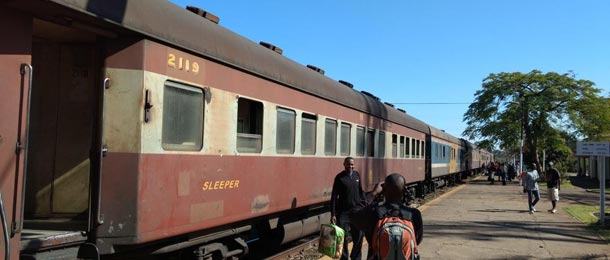
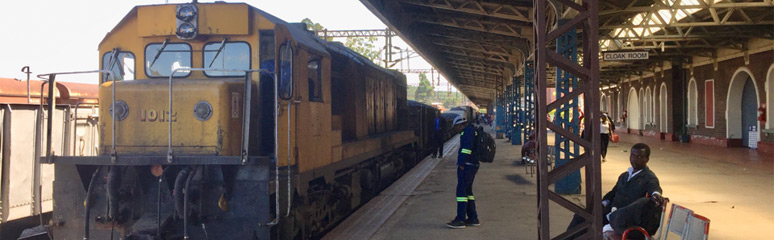
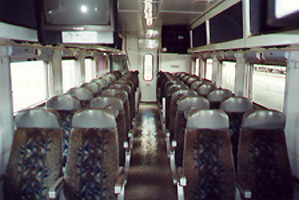
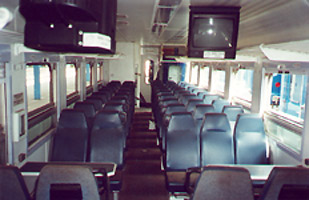
The Vic Falls to Bulawayo train at Vic Falls in March 2026. Courtesy of Clayton Giles. Interiors courtesy of Sarah Blythe.


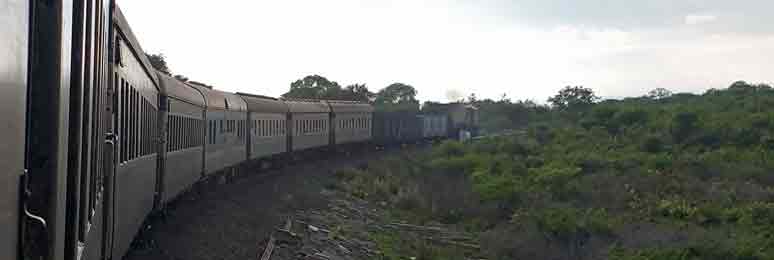
The Vic Falls to Bulawayo train at Vic Falls in March 2026. Courtesy of Clayton Giles.
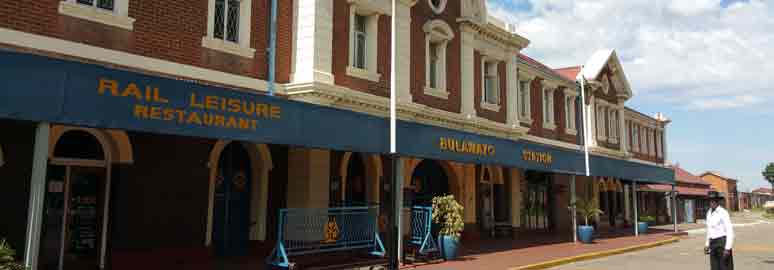
Bulawayo station. Courtesy of John Harrington.
What is the train like?
In it's current 2026 form, the Bulawayo-Victoria Falls train normally has 3 economy class seats cars, two first class sleeping-cars and a brake van.
-
1st class sleepers, which have 2-berth rooms (traditionally known as coupés) and 4-berth rooms (known as compartments). These have leatherette bench seats convertible to bunks, and each room has a fold-out washbasin with (if it works, it may not) cold water. Bedding is available for $5 extra, ask when you buy tickets. The windows open for clear view of the countryside, and at night, there's a metal / mesh screen to allow cool air in whilst keeping you secure. The carriage lights may not work, so a torch is handy!
-
Economy class seats: Basic seating, which does not convert to berths.
In 1st class, 2 passengers travelling together will normally be booked into a 2-berth coupé, whereas a solo traveller will be booked into a 4-berth compartment with passengers of the same sex. If you pay for two tickets (perfectly affordable, given the fare) you can have sole occupancy of a coupé. The sleeping-cars are all British-built, the ones with wood-panelled interiors in Gloucester in 1952, the ones with the less attractive formica interiors in Birmingham in 1958. Although they now carry National Railways of Zimbabwe insignia, they are still painted in the original 'Rhodesia Railways' colours, and windows and mirrors are etched with the 'RR' logo. The coaches were in OK condition when I travelled myself in 2001, but admittedly have been let go a bit lately and are now fairly decrepit, given Zim's economic circumstances. I'm not clear if the wood-panelled 1952 cars are still used, most recent reports have included photos of the 1958 cars.
Travellers' reports
Traveller Chris Brewster rode the train in August 2026:
"We caught the Bulawayo - Victoria Falls train on 7 Aug. We booked at the station in the morning on the 7th without issue. The fare was 20 US dollars in first class. Bedding (three blankets + linen) was 5 dollars, payable at the booking office. There were some vacant 1st class seats on the train when it left. We were not given a specific seat, only a compartment written on the back of the ticket.
Boarding started around 18:15, when there was a stampede, almost knocking us over, from the end of the platforms to the economy class seats. The train consisted of four economy class carriages and four first class carriages, plus some baggage vans.
The train was busy. It left at 19:09, reaching Dete at around 06:30. It was a mixed train with empty coal trucks attached from Dete to Thomson Junction. Arrival at Victoria Falls was at 2pm, some four hours late, I had been told at Bulawayo that it should arrive around midday.
No food or drink on the train but someone was selling simple Zimbabwean fare (Ntshima + meat) at Thomson Junction. The journey was very enjoyable, well worth it, a great way to travel.
Dete to Victoria Falls was in daylight and some wildlife (Spotted Hyenas, lions, hippos, giraffes, elephants) was visible from the train. The train was reinstated due to public demand as the Bulawayo-Vic Falls road is in very bad condition and people prefer the train instead of driving or bus.
Traveller Sarah Blythe rode the train in March 2026:
"The train arrived in Bulawayo at 13:15 rather than the advertised 10:00, apparently this is due to cautions on the line due to the damaged track. The train made several unofficial stops in small villages on the way for people to get on with their cargo to sell in Bulawayo, things like sugar cane - apparently this helps to boost the train's struggling revenue, so this also would have contributed to the late running.
The train is of about equal cleanliness with an Indian train, and I travel in India frequently so I'm used to that. I bought my ticket an hour before the train, which had to be paid in cash in USD. It was $18 for either a bed in a 2 bed berth or a 4 bed berth. I was lucky and got allocated a 2 bed berth with nobody else in, so I could have the compartment to myself and lock it. There were a lot of unallocated berths as the man in the office said they don't often sell a lot of tickets, so I had a lot of choice. At one point the conductor said I might have to pay for the second bed too if I didn't want it to be sold to somebody en route but I never got asked about it again.
I paid $5 for sheets, and the carriage itself was quite hot with no A/C or fan. The window opens fully which was essential for a breeze but also good for looking out at the night sky. I was told by a couple that had taken the Bulawayo-Vic Falls train that they had seen a giraffe on their route, as the train passes several game reserves. It was too dark for most of my journey to see anything. Overall an enjoyable journey - and I was pleased to see mentions of Birmingham on the sink and other metal fixtures, as that is my home city!"
Things to do in Victoria Falls...
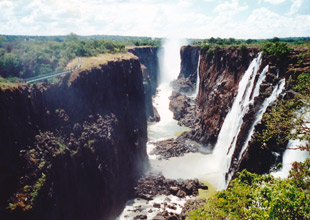 Victoria Falls... |
|
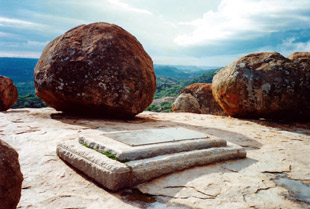 Cecil Rhodes grave, in a breath-taking spot in Matobo, on a rocky outcrop known as The view of the world. |
-
Visit the park to see the Falls from the Zimbabwe side. The park entrance fee is about USD 58- take some waterproof clothing!
Walk across the frontier into Zambia to see the Zambian part of the Falls. Between the Zimbabwean and Zambian frontier posts you cross the famous steel bridge carrying the road and railway across the Zambezi between the Zimbabwean and Zambian sides of the river. Remember to have US$ 20 on you in US dollars cash (this may now have changed with the restoration of Zim$), as this is the cost of a Zambian one-day visa. Sterling is also accepted, but not South African Rand. If you pass any warthogs on the way, give them a wide berth!
Arrange a day trip to Chobe game reserve in Botswana. There are many operators offering similar trips. A 45-minute minibus transfer takes you from your hotel to the Botswana frontier. A 3-hour game drive in the Chobe National Park is followed by a 3-hour river trip with lunch. Animals include lion, impala, antelope, elephant, hippo, warthog, crocodile, mongoose, and even tortoise.
Take afternoon tea at the Victoria Falls Hotel, the poshest hotel in town. Staying there will cost you £150 per night. Afternoon tea (complete with cucumber sandwiches) will cost you more like £10. The hotel is right next to the railway station.
Go on an afternoon river cruise on the Zambezi. Many operators offer similar trips for the going rate of about £15, which includes plentiful wine or beer. You will probably see hippo and crocodile.
For those interested, there are a whole range of adventure activities available such as white water rafting down the Zambezi, or for the completely insane, bunji jumping off the Zambezi bridge.
...and in Bulawayo
Bulawayo is a pleasant town, well spread out with wide open streets and relatively little traffic. There is an excellent railway museum, which features Cecil Rhodes' private railway coach. You should not miss a day trip to the Matobo National Park, some 25 miles South of Bulawayo, where Cecil Rhodes is buried (see photo, right). Day tours generally visit the Whovi game reserve in the morning (famous for its rhinos), then the haunting hills of the main park in the afternoon.
Bulawayo to Harare by train
This train used to run daily, but was reduced to 3 times a week in 2009. Expect an arrival an hour or two late.
Update 2026: This passenger train is still suspended post-pandemic, but check locally.
You can check times at www.nrz.co.zw.
Fares: Sleeper class $15, Standard class seat $12, Economy seat $10.
How to buy tickets
The only way to buy tickets is at Bulawayo and Harare station reservation offices, up to 30 days before departure. Reservations are not fully computerised, and can only be made for trains leaving from that station - reservations for your return journey will need to be made when you reach your destination. In Bulawayo, the reservations office is open 08:00-19:30 on Mondays-Fridays, 16:00-19:30 on Saturdays & Sundays. Opening times at Harare station are not known. It's best to get to the booking office early in the day, as there is one sleeping-car on this train which can get fully-booked (but see the section below about it being a 'staff only' sleeper!). Fares are not expensive - in the region of £20/$35 or less one way in a sleeper.
What's the train like?
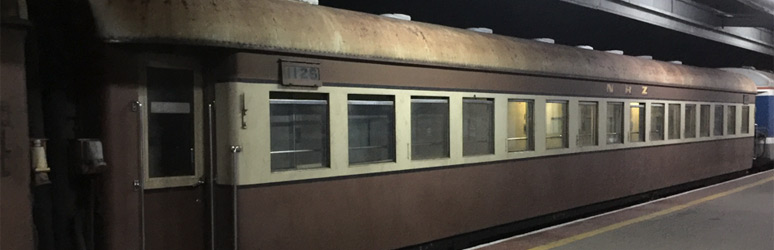
New coaches were introduced on the Bulawayo-Harare overnight train in the 1980s, but these 'new' sleeper class cars seem to have ended up on the Vic Falls route and an older 1958-built 1st class sleeping-car has been deployed on the Bulawayo-Harare train. Indeed, this route now seems to be run as a mixed train, with goods wagons as well as passenger cars. In principle, there are 3 classes of accommodation on this train:
-
1st class sleeper: A classic 1958 car with 2-berth rooms (known as coupés) and 4-berth rooms (known as compartments). These have leatherette bench seats convertible to bunks, and each room has a washbasin which may or may not have any running water, see the sleeper photos in the Victoria Falls section above. The car is certainly not air-conditioned and no bedding is provided, but the windows open for a superb view of the countryside, and at night, a metal / mesh screen can be used to allow cool air in but keep you safe and secure.
Important: In 2019, so far two correspondents have reported being told that the sleeping-car was 'for staff only' which certainly shouldn't be the case. Both correspondents nevertheless managed to acquire sleeper berths on the train!
-
Standard class: comfortable airline-style seating.
-
Economy class: basic seating.
Traveller's reports
Traveller Edo Dijkstra reports from a Bulawayo to Harare trip in 2019: "I arrived yesterday in Harare by night train from Bulawayo at 13.15 hours ! It consisted of a lot of freight trucks (mixed trains seem to be the norm in Zimbabwe) 3 economy class cars, 2 standard class cars and a 1st class sleeping car from 1958. What I understand is that the sleeping car is no longer for general use but for railway staff use only! Luckily with the help of the curator of the railway museum I was able to get a berth in this coach anyway."
Traveller Ivor Ines reports from a Bulawayo-Harare trip in 2017: "The carriages for this train were introduced in 1998, but they are now much the worse for wear. Bedding was provided, though the attendant apologised profusely that there were no sheets, only blankets and pillows. Bedding was issued after departure, although as I didn’t realise this, I ran around before departure to check we wouldn’t be left blanket-less throughout a cold night. It seemed that quite a few passengers had brought their own bedding, even first class. The compartment window and screen still worked, in other words, opened, closed and locked in position. Although the main compartment lock was broken, there was still a security chain which I then padlocked closed, and we felt quite safe and secure during the journey. In standard class, although the TVs were still there, there was no sign of them working which is probably a positive, in terms of actually being able to sleep... The train had a great, wood panelled buffet car complete with bar area, restaurant area and full kitchen. Unfortunately, it was only serving drinks (sodas and beer, no hot drinks) and a few snacks like biscuits and strange-looking crisps, no substantive food. The train left Harare punctually at 9pm, but NRZ seem to have given up on any attempt at predicting arrival times. We arrived in Bulawayo around 10am, which I suspect is ‘normal’, although the staff said that sometimes freight wagons are attached to the passenger train, and so it runs even slower."
Other trains in Zimbabwe
Update 2026: The services below remain suspended post-pandemic.
Harare to Mutare
The train has 1st & 2nd class sleepers and Economy seats. Distance 273km.
Fares: 1st class sleeper $7, 2nd class sleeper $5, Economy seat $4.
Bulawayo to Chiredzi
The train has 1st & 2nd class sleepers & Economy seats. Distance 523km.
Fares: 1st class sleeper $14, 2nd class sleeper $10, Economy seat $8.
Bulawayo to Beitbridge (South African border)
IMPORTANT: Bulawayo-Beitbridge service cancelled July 2014 until further notice. Still not running in 2019.
The train has 1st, 2nd & Economy class. Distance not known.
You can take local transport across the Beitbridge-Messina border and take the Shosholoza Meyl train from Messina to Pretoria & Johannesburg, see the South Africa page for times and days of running.
Bulawayo to Chicualacuala & Maputo (Mozambique): See the Mozambique page...
Other trains
There are also twice weekly 'mixed' trains (meaning freight wagons and passenger car) from Harare to Shamva and from Harare to Lion's Den.
Fares & how to buy tickets
Expect the first class sleeper fare for all these overnight trains to be around US$10. Reservations cannot be made in advance, only on the day of travel, but outside peak holiday times it's no problem to get a place on the day.
International links
South Africa - Zimbabwe by train or bus
Whatever you may read in your guidebook, there are now no direct scheduled trains from South Africa to Zimbabwe, and have not been for years. If your guidebook is some years old, it may mention weekly trains from Johannesburg to Harare and Bulawayo, but for political reasons (in fact, exorbitant haulage charges imposed by the National Railways of Zimbabwe) these were suspended in 1999. Similarly, the daily train that used to link Mafeking and Bulawayo via Gaborone was first (1999) cut back to run purely within Botswana, and was then (2009) completely withdrawn. In 2007, National Railways of Zimbabwe allegedly considered re-instating a Harare-Johannesburg train some time before 2010, but there's no sign of this happening. So there are now several less-than-brilliant choices for overland travel from SA to Zimbabwe:
-
Johannesburg - Messina/Beitbridge - Bulawayo by train+bus or train & train: There used to be an overnight Shosholoza Meyl economy train from Johannesburg or Pretoria to Messina, see train travel in South Africa - but it was discontinued in 2014. Messina is 12km short of the frontier at Beitbridge, from where you can take irregular African buses to both Harare and Bulawayo. There was a twice weekly train from Beitbridge to Bulawayo, see the section above, but this too has been discontinued.
-
Johannesburg - Bulawayo by bus: Two companies run modern buses overnight direct from Johannesburg/Pretoria to Bulawayo, with departures most nights. The journey is takes about 13 hours from Pretoria. Visit www.greyhound.co.za and res.prasa.com/translux/booking for details. Although neither as civilised or comfortable as a train, this is probably the simplest overland option.
-
Cruise trains from South Africa to Zimbabwe: If you have the money, there are several tourist 'cruise' trains. The Blue Train (www.bluetrain.co.za) operates from Pretoria to Victoria Falls about once a month. However, you can reckon on a one-way fare exceeding £500. Rovos Rail (www.rovos.co.za) also operate on this route. Check that these are still operating - Zimbabwe Railways' high haulage rates have hit these trains, too.
Botswana - Zimbabwe by train
The daily Mafeking-Gaborone-Francistown-Bulawayo train was cut back to running purely within Botswana in 1999. A Francistown-Bulawayo train service started in June 2006, running 3 times weekly with modern coaches (complete with TV entertainment!), see the Train travel in Botswana page for current status, train times and days of running.
Zambia - Zimbabwe by train
There are now no scheduled passenger trains across the famous Zambesi bridge from Victoria Falls (Zimbabwe) to Livingstone (Zambia). But you can walk across the bridge from Vic Falls to the Zambian border post and take a taxi the few miles on to Livingstone. Trains run from Livingstone to Lusaka and Kapiri Mposhi, where you can change trains onto the Tazara line to Dar es Salaam. See the Train travel in Tanzania & Zambia page for train times, fares & days of running.
Namibia - Zimbabwe by bus
A bus links Victoria Falls with Windhoek 3 times a week, see the Namibia page or www.intercape.co.za.
Mozambique - Zimbabwe by train: See the Mozambique page...
Hotels in Zimbabwe
In Victoria Falls: If you fancy a splurge, the best place to stay is of course the world-famous Victoria Falls Hotel. At least have a drink in the bar! For something cheaper but still close to the station, try the Victoria Falls Oasis.
In Bulawayo, try the Bulawayo Club, a 22-minute 1.6 km walk from Bulawayo station. Good location, great reviews, and a classic building.

 Backpacker
hostels
Backpacker
hostels
www.hostelworld.com: If you're on a tight budget, don't forget about backpacker hostels. Hostelworld offers online booking of cheap private rooms or dorm beds in backpacker hostels in most cities at rock-bottom prices.
Guidebooks
To get the most from a trip to Southern Africa, you'll need a good guidebook - and I think the Lonely Planet guides are about the best ones out there for independent travel.
 Click the images to buy
at Amazon.co.uk...
Click the images to buy
at Amazon.co.uk...
The Southern Africa guidebook is less detailed than the Zimbabwe one, but it covers South Africa, Botswana, Namibia, and several other countries in Southern Africa as well as Zimbabwe.

Travel insurance & other tips
|
|
|
|
|

Always take out travel insurance
Never travel overseas without travel insurance from a reliable insurer, with at least £1m or preferably £5m medical cover. It should also cover cancellation and loss of cash and belongings, up to a sensible limit. An annual multi-trip policy is usually cheaper than several single-trip policies even for just 2 or 3 trips a year, I have an annual policy with Staysure.co.uk myself. Here are some suggested insurers. I get a small commission if you buy through these links.
 www.staysure.co.uk
offers enhanced Covid-19 protection & gets 4.7 out of 5 on
Trustpilot.
www.staysure.co.uk
offers enhanced Covid-19 protection & gets 4.7 out of 5 on
Trustpilot.
www.columbusdirect.com
is also a well-know brand.
 www.staysure.com/ie if you live in Ireland.
 If you live in the USA try
Travel Guard USA.
If you live in the USA try
Travel Guard USA.
|
|

Get an eSIM with mobile data package
Don't rely on WiFi, download an eSIM with a European mobile data package and stay connected. Most newer mobile phones can download a virtual SIM including iPhone 11 & later, see device compatibility list. There's no need to buy a physical SIM card! Maya.net is a reliable eSIM data retailer with a 4.5 out of 5 Trustpilot rating and a range of packages including unlimited data.
|
|

Get a VPN for safe browsing. Why you need a VPN
When you're travelling you often use free WiFi in public places which may not be secure. A VPN encrypts your connection so it's always secure, even on unsecured WiFi. It also means you can select the geographic location of the IP address you browse with, to get around geoblocking which a surprising number of websites apply. See VPNs & why you need one explained. ExpressVPN is a best buy with a 4.7 out of 5 Trustpilot ranking which I use myself - I've signed up as an ExpressVPN affiliate, and if you go with expressvpn.com using the links on this page, you should see a special deal, 3 months free with an annual subscription. I get a small commission to help support this site.
|
|


Get a Curve card for foreign travel
Most banks give you a poor exchange rate, then add a foreign transaction fee on top. A Curve MasterCard means no foreign transaction fees and gives you the mid-market exchange rate, at least up to a certain limit, £500 per month at time of writing. The money you spend on your Curve card goes straight onto one of your existing debit or credit cards.
How it works: 1. Download the Curve app for iPhone or Android. 2. Enter your details & they'll send you a Curve MasterCard - they send to the UK and most European addresses. 3. Link your existing credit & debit cards to the app, you can link up to two cards with the free version of Curve, I link my normal debit card and my normal credit card. 4. Now use the Curve MasterCard to buy things online or in person or take cash from ATMs, exactly like a normal MasterCard. Curve does the currency conversion and puts the balance in your own currency onto whichever debit or credit card is currently selected in the Curve app. You can even change your mind about which card it goes onto, within 14 days of the transaction.
I have a Curve Blue card myself, it means I can buy a coffee on a foreign station on a card without being stung by fees and lousy exchange rates, just by tapping the Curve card on their card reader. The money goes through Curve to my normal debit card and is taken directly from my account (in fact I have the Curve card set up as payment card on Apple Pay on my iPhone, so can double-click my phone, let it do Face ID then tap the reader with the phone - even easier than digging a card out). I get a little commission if you sign up to Curve, but I recommend it here because I think it's great. See details, download the app and get a Curve card, they'll give you £5 cashback through that link.
|
|

Carry an Anker powerbank
Tickets, reservations, vaccination records and Interrail or Eurail passes are often held digitally on your mobile phone, so it's vital to keep it charged. I always carry an Anker powerbank which can recharge my phone several times over if I can't get to a power outlet. Buy from Amazon.co.uk or from buy from Amazon.com.
Touring cities? Use hill walking shoes!
One of the best things I've done is swap my normal shoes for hill-walking shoes, in my case from Scarpa. They're intended for hiking across the Pennines not wandering around Bangkok, but the support and cushioning for hiking works equally well when you're on your feet all day exploring foreign cities. My feet used to give out first and limit my day, now the rest of me gives up before they do!