


For practical information on times, fares & tickets, see the Trans-Siberian page.
This is an account of a Moscow to Beijing journey on Trans-Siberian train number 4, the weekly Chinese train from the Russian to the Chinese capital via Mongolia. For an account of the Moscow to Vladivostok journey, see here.
This train has been cancelled since 2019. The Foreign Office now advises against all travel to Russia.
 |
 |
|
|
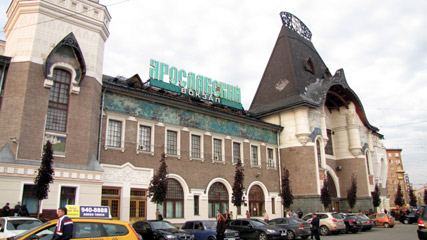
Day 1, evening: Yaroslavski station, Moscow. Trans-Siberian trains leave from this distinctive station in central Moscow. Train 4 to Beijing leaves Moscow Tuesday nights. Photo courtesy of Peter & Janet Jackson. |
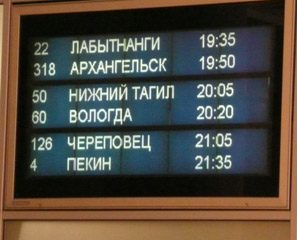
The departure board at Yaroslavski station shows train 4 to 'Pekin' leaving at 21:35. The platform is not yet displayed... Photo courtesy of Tony Willis. |
 |
 |
 |
||
|
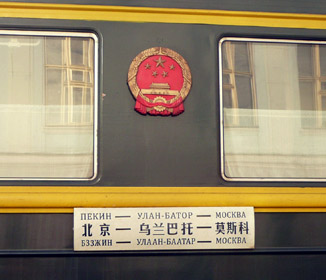
Train 4 is a Chinese train, each carriage proudly displaying a destination board marked "Moscow-Ulan Bator-Beijing". You'll find plenty of westerners on board, with a party atmosphere all the way. There'll be plenty of Chinese, Russians & Poles to meet, too. Photo courtesy of Tony Willis. |
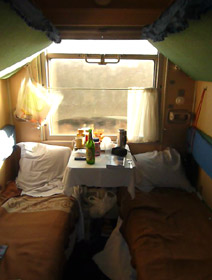
This is a 4-berth sleeper. By day, you sit on the lower bunks with the upper ones raised. Your luggage is under the berths or above the door to the corridor. Courtesy of Tony Willis. |
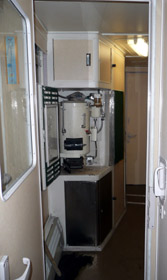
A samovar at the end of every car provides free boiling water. Bring some instant coffee, cocoa or noodles. Courtesy of Tony Willis. |
 |
 |
|
|
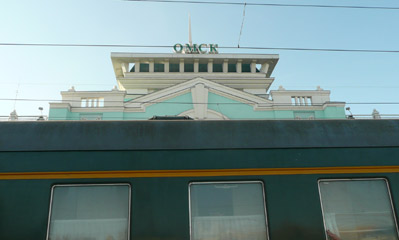
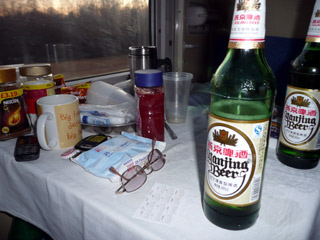
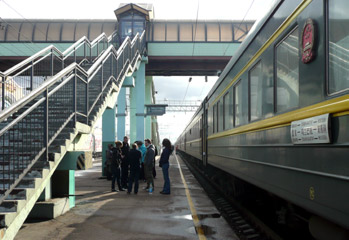
The train calls at Omsk... The train stops at a station every few hours, usually for 5-20 minutes, long enough to stretch your legs, buy something from the station traders or stalls, and take photographs. But not long enough for a tour of the town, so stay close to the train! Within Russia, Trans-Siberian trains are pretty punctual. Above right, your compartment becomes a home from home... Incidentally, 'Compartment' is the correct term on a train, 'cabin' is what you get on a ship. Photos courtesy of Tony Willis. |
||
 |
 |
|
|
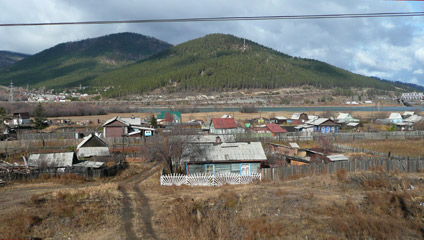
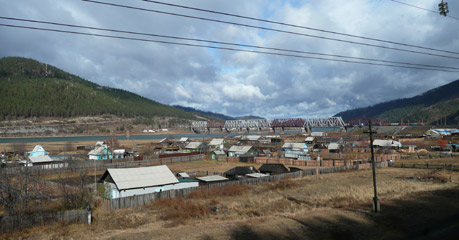
Days 2, 3, 4 & 5 are spent crossing Siberia... The train crosses the boundary from Europe to Asia in the Urals at kilometre post 1,777, some 1,111 miles east of Moscow, although as train 4 passes this point around 01:00 in the small hours on day 3, you probably won't see the famous obelisk marking the boundary. On day 4, the train rounds Lake Baikal, the deepest fresh water lake in the world, with excellent views of the lake. Photos courtesy of Tony Willis. |
||
 |
 |
|
|
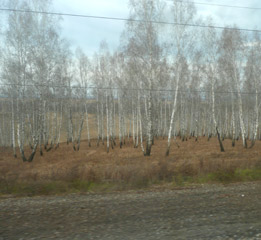
Typical Siberian scenery... You do like birch trees, don't you? You'll see endless birches in Siberia, and villages of little wooden houses with mud streets. The scenery is lush and green in summer and it can be humid, although train 3/4 isn't fully air-conditioned. There are occasional glimpses of onion-domed churches. It's not all rural of course - around the cities, you'll see much of Siberia's heavy industry. Photos courtesy of Tony Willis. |
||
 |
 |
|
|
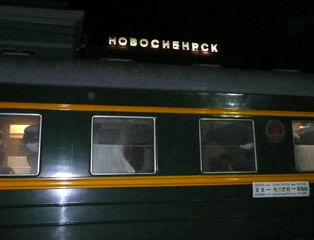
The train calls at Novosibirsk, one of Siberia's largest cities and another chance for you to stretch your legs. Photos courtesy of Tony Willis. |
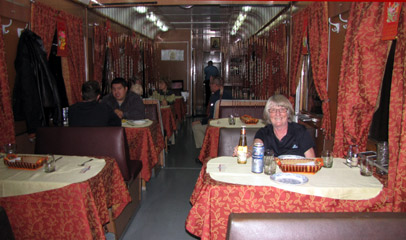
A Russian restaurant car is attached in Russia. Beer, excellent Russian tea, schnitzels, chicken, ham & eggs. The food isn't exactly gourmet, but it's filling and inexpensive, at around $10-$15 for a complete meal, Roubles or US Dollars accepted. Photo courtesy of Peter & Janet Jackson. |
 |
 |
|
|
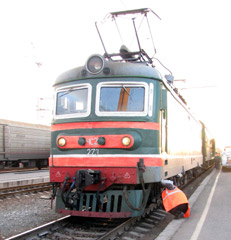
Some of these venerable Skoda CHS2s are still in service. Up front, the locomotive is changed regularly... |
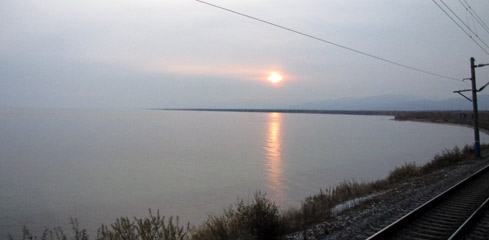
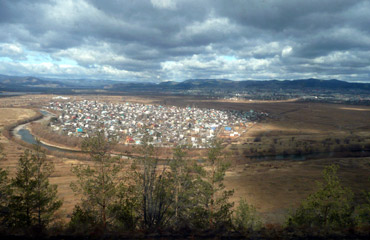
Day 5, Sunrise over Lake Baikal... After an early-morning call at Irkutsk, the train rounds the bottom end of Lake Baikal, the world's deepest freshwater lake. At times, the train runs right by the lake shore. Courtesy of Peter & Janet Jackson. |
 |
 |
|
|
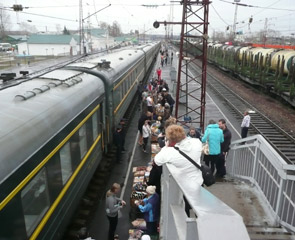
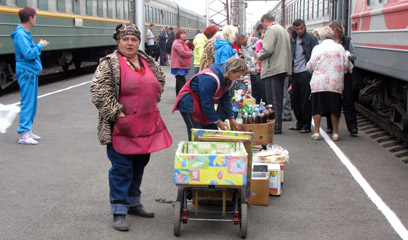
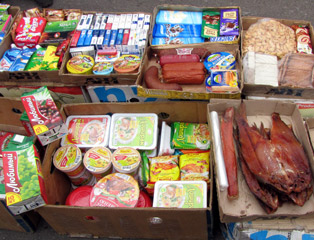
Station traders sell biscuits, sausages, chocolate and other foodstuff on platforms along the way. You won't go hungry! Photos courtesy of Peter & Janet Jackson. |
||
 |
 |
|
|
Day 5, afternoon: Ulan Ude. Here, train 4 swings south off the main Trans-Siberian line onto the Trans-Mongolian route, completed in the 1950s. Photos courtesy of Tony Willis. |
||
 |
 |
|
|
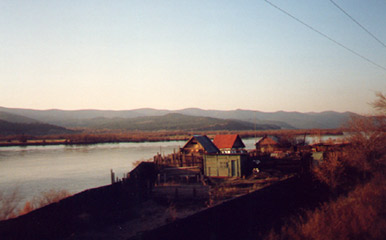
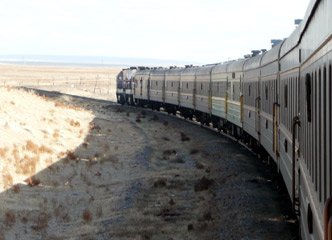
In the warm afternoon sun, the train follows the Selenge River south to the Mongolian Border... Photo Mark Smith |
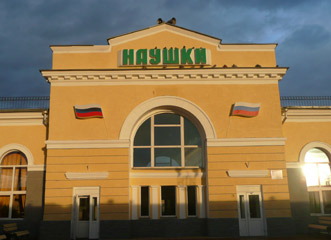
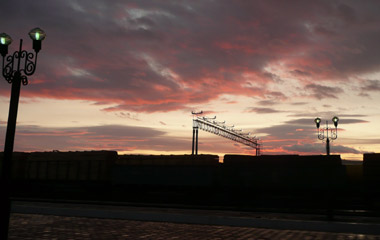
Day 5, evening: Naushki is the Russian border point, reached in the evening. The train spends 2-3 hours here. Photo courtesy of Tony Willis. |
 |
 |
|
|
Day 5, sunset. You enter Mongolia at Suche Bator late at night on day 5, where the train spends an hour or two. Passport formalities are carried out on board the train. Photo courtesy of Tony Willis. |
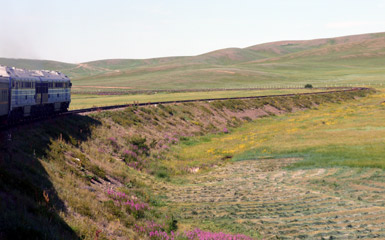
Day 6: Welcome to Mongolia! The scenery has changed totally. You wake to grassy steppe covered in early morning dew, approaching Ulan Bator. Courtesy of Tony Willis. |
 |
 |
|
|
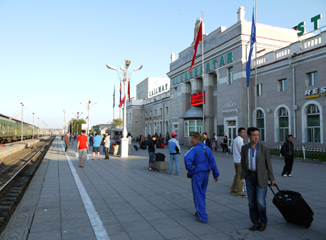
Day 6, morning: Ulan Bator. The train spends half an hour here, so take a stroll on the platform in the morning sun. Photo Marc van Dyck |
Heading south from Ulan Bator. More grassy steppe and wild flowers as the train heads for the Gobi desert... Photo courtesy of Photo Marc van Dyck. |
 |
 |
|
|
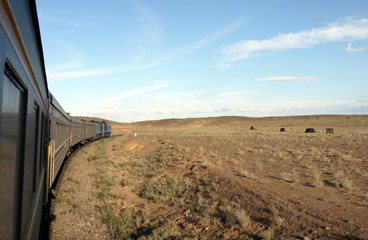
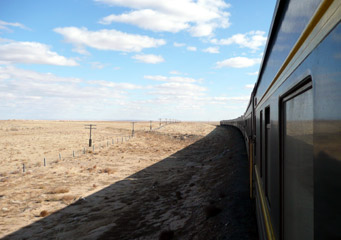
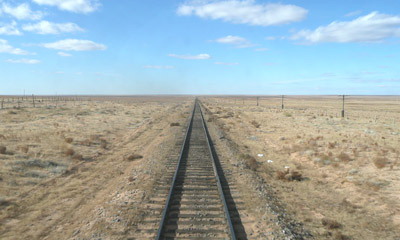
Day 6: The Gobi Desert: The train now crosses the wide open spaces of the Gobi desert. Watch out for 'yurts' (the Mongolian nomads' circular tents) and camels. Photos courtesy of Marc van Dyck & Tony Willis. |
||
 |
 |
|
|
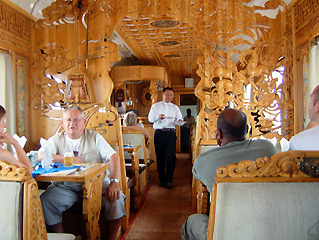
A Mongolian restaurant car is attached for day 6. Expect mutton & rice to feature on the menu, with Mongolian beer. Courtesy of Tristan Wilson. |
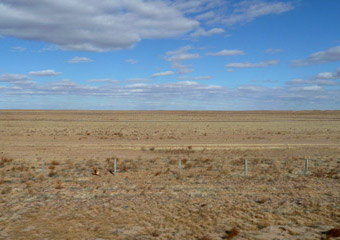
More Gobi Desert. The train toils across the vast open spaces. Keep those eyes peeled for camels and yurts! Photo courtesy of Tony Willis. |
 |
|
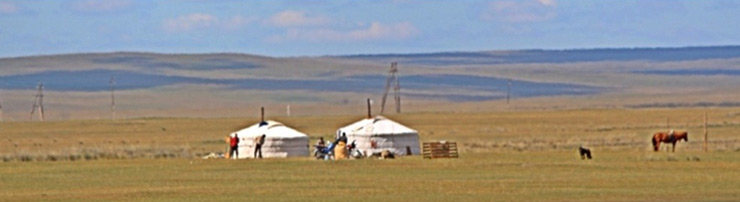
Yurt alert! You'll often spot yurts, the tents used by the nomads on the Mongolian Gobi. Courtesy Tom Woods. |
 |
 |
|
|
Still on the Gobi... Courtesy Tony Willis. |
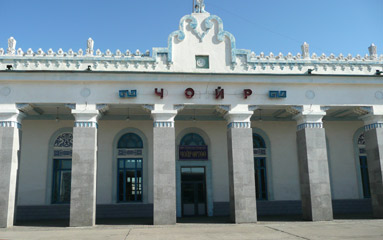
Day 6: Choir. Watch out for the stainless steel statue of Mongolia's only cosmonaut in front of the station building, a local boy made good... Photo courtesy of Tony Willis. |
 |
 |
|
|
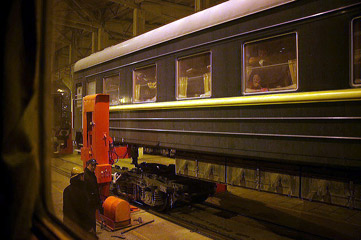
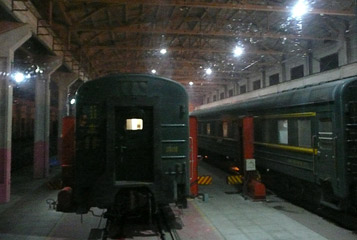
Day 6, evening: The Chinese border at Erlan. The train first spends an hour and a half at the Mongolian border point Dzamin Uud, then crosses to the Chinese border point, Erlan (also spelt Erlyan or Erlian). Welcome to China! After a brief halt in Erlan platform accompanied by triumphant martial music played at full volume over the station's loudspeakers, the train is shunted off to the gauge-changing shed. Here, each carriage is separated and jacked up to have its bogies (wheelsets) changed from Russian 5' gauge to the standard 4' 8½" gauge used in China. You used to be able to remain on board while this is done, it now seems that all passengers must get off at the station before the train is taken away, to go through border formalities before rejoining the train when it is shunted back into the station. The train spends almost 4 hours at Erlan, including the gauge-changing procedure, and it doesn't finally leave until almost 1am. See a video of the bogie-changing process. Right photo courtesy of Tony Willis, left photo courtesy of Sascha & Manuela Dubach. The photo above left in fact shows train 23 at Erlan, with MTZ (Mongolian Railways) sleepers. |
||
 |
 |
|
|
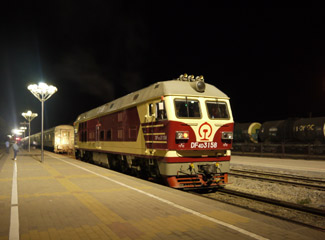
A Chinese locomotive is attached at Erlan for the journey to Beijing. Courtesy of Marc van Dyck |
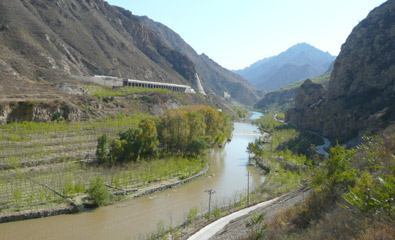
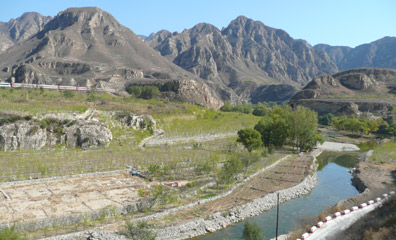
Scenery next morning in China... Photo courtesy of Tony Willis |
 |
 |
|
|
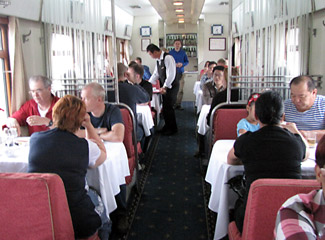
Day 7, China: Once again, the scenery has changed completely. You're now crossing the mountains of northern China. Watch out for glimpses of the Great Wall of China in the distance. A Chinese restaurant car has been attached at Erlan, serving excellent Chinese food. Photos courtesy of Tony Willis. |
||
 |
 |
|
|
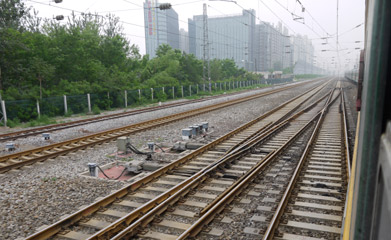
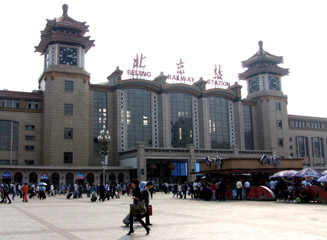
Day 7, afternoon: Arrival in Beijing. Journey's end, at Beijing's main station, 6 nights and 4,735 miles from Moscow. Your arrival may be on time, but can sometimes be an hour or two late if the train has lost time at the border. Photos courtesy of Tony Willis & Peter Jackson. |
||
For practical information on times, fares & how to buy tickets for this train, see the Trans-Siberian page.
