


 |
|
Buy Russian train tickets from www.railrussia.comThe official Railways website www.rzd.ru is currently geo-blocked and unreachable. |
Times, fares & tickets in Russia
The Russian rail system is one of the largest in the world, and trains serve almost every town and city in Russia. Train travel is a safe, comfortable and inexpensive way to get around. In fact, it can be safer to use Russian trains than internal flights! It will certainly be cheaper and far more interesting. This page will help you understand Russian train system, choose the right train & on-board accommodation for you, and buy your train tickets securely online from a reputable source.
IMPORTANT UPDATE: The Foreign Office now advises against all travel to Russia because of the war between Russia & Ukraine, see www.gov.uk/foreign-travel-advice/russia. I have left this page as is, I'm not currently updating it. The Russian Railways website www.rzd.ru is currently geoblocked and unreachable, if you need to book trains in Russia, use www.railrussia.com.
 How to check train times & fares
in Russia
How to check train times & fares
in Russia
Moscow to St
Petersburg by train - a quick guide
How
to buy Russian train tickets - online or at the station
On other pages
Russian visas & how to get one
Useful country
information: Time zone, currency...
Train travel from London to Moscow
How to book a trip on the
Trans-Siberian Railway
Trains from Moscow to Central Asia
Moscow & St Petersburg to
Helsinki by train
Moscow & St Petersburg to Tallinn by train
Moscow & St Petersburg to Riga by train
How to check Russian train times & fares
There are several ways to check train times & fares for journeys within Russia, Ukraine, Belarus, Uzbekistan, Kazakhstan, and the other ex-Soviet republics:
-
Option 1, use www.railrussia.com. This is an agency that connects to RZD's system to book trains in English without the need to access rzd.ru. Feedback appreciated.
-
Option 2, use the Russian Railways website www.rzd.ru. However, under the current political situation it is geo-blocked and unavailable. Use www.railrussia.com instead.
Booking tips
-
Booking opens 90 days ahead for most trains. Since 2019, a handful of trains including the Moscow-St Petersburg Red Arrow and (for summer) all Sapsan trains open up to 120 days ahead.
-
Train fares in Russia are not particularly expensive, although there have been significant price rises over the last few years. Moscow-St Petersburg on a top-quality firmeny sleeper train such as train 1/2 Krasnaya Strela costs around 3,200 roubles. On a lower quality Moscow-St Petersburg overnight train such as train 56, you can find kupé tickets for as little as 2,260 rubles, platskartny berths for 1,400 rubles, though I'd still recommend taking the better trains.
-
Look for trains described as firm, short for firmeny which is the top quality category of long-distance fast train with the most modern coaches and a high standard of on board service.
-
Russian fares vary by season. Higher fares are charged at Easter, New Year, July & August, lower fares in January & February. Higher fares are charged for the fast high-quality firmeny trains, lower fares for slower unnamed low-quality trains.
-
On the best trains you can buy tickets either 'without services' (no meals) or 'with services' (meals included, either served in the restaurant or in your compartment). A number against a knife & fork logo on the Real Russia booking system or a 'У' with a number in the 'category' column on rzd.ru indicates the total number of meals you get with a 'with services' ticket, it might be just one or two even on a journey lasting several days. An example of the sort of meal served can be seen in these photos from the Moscow-Irkutsk-Vladivostok Rossiya.
-
Trains used to run to Moscow time in Russia, even where local time was 7 hours ahead of Moscow, and Russian rail timetables used to show Moscow time for all stops. However, after over a century RZD Russian Railways ended this practice in August 2018, and you should now find online booking systems and station timetables showing local time at each stop. It makes things a lot easier to understand!
-
Children: In Russia, one child aged 0 to 4 travels free, children aged 5 to 9 travel at half fare, children aged 10 and over must pay full fare. Important: Note that unlike trains in most of Europe, on Russian trains even infants and babies travelling for free must have a (free of charge) ticket with their name on it.
Moscow to St Petersburg by train: A quick guide...
-
Moscow-St Petersburg is the most popular route in Russia. This trip has traditionally been made overnight by comfortable sleeper train (with a hotel bill saved!), though Sapsan high-speed daytime trains are now making their appearance with the journey time cut to as little as 3 hours 50 minutes. Incidentally, in 2010 train travel had a 77% share of the Moscow to St Petersburg market (48% Sapsan and 29% sleeper & other trains). Air travel accounted for just 23% of journeys.
-
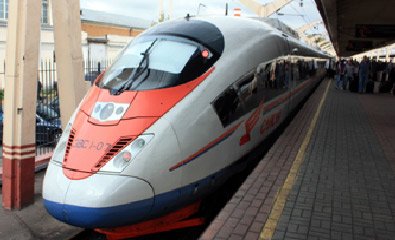
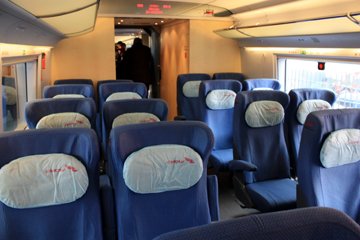
Sapsan high-speed daytime trains, introduced on 18 December 2009: The first Sapsan (Peregrine Falcon) 250 km/h high-speed daytime trains were introduced between Moscow & St Petersburg in December 2009, taking just 3 hours 55 minutes. There are now 5 services daily in each direction, with a 99% on-time performance and an average load factor of 83% full. The Sapsan trains are built by Siemens and based on the superb German ICE. See the Russian railways Sapsan video.
-
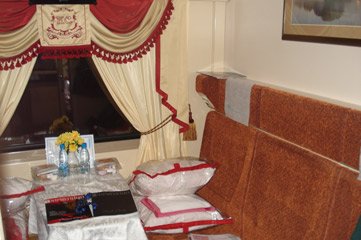
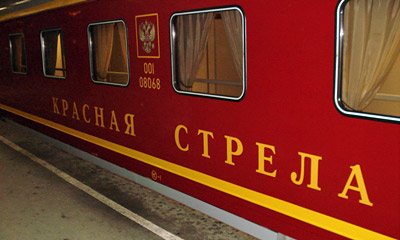
Overnight sleeper trains: The most historic Moscow-St Petersburg overnight train and still one of the best is the Krasnya Strela or Red Arrow, train 1 southbound, train 2 northbound, see the photos below. This was Russia's premier train in Soviet times, and still leaves both Moscow (Oktyabrskaya/Leningradski station) & St Petersburg (Glavny/Oktyabrskaya/Moskovskaya station) at 23:55, arriving around 08:25 next morning. It has high-quality 2-berth an 4-berth sleepers, plus an expensive deluxe sleeping-car with 2-berth en suite compartments. Ticket office fare around 6,000 roubles (£125) in spalny vagon (1st class 2-berth) or 3,000 roubles (£62) in kupé (2nd class 4-berth). It's now been joined by a couple of other quality 'Firmeny' trains running to very similar timings, train 3/4 Ekspress and train 5/6 Nicholaevsky Express. There are many other less-prestigious overnight trains on the Moscow-St Petersburg route, too.
-
Luxury Grand Express overnight train: There's now also a privately-run luxury train between St Petersburg and Moscow overnight, the Grand Express. Fares start from about 3,300 rubles (£68 or $110) for the cheapest of four classes of sleeper, all with in-room TV (note that solo passengers must pay for two tickets for sole occupancy, they cannot share a 2-berth room). The most expensive rooms have a private shower and toilet. Their website is www.grandexpress.ru.
-
Traveller Ian Newberry reports: "on May 19 I travelled from Moscow to St Petersburg on high-speed Sapsan train 156 leaving at 13.00. Departure was punctual and the staff greeting passengers could not have been better - they all speak English as well as Russian. The service on the train was extremely good and in business class a full 3 course meal was served with wines and spirits all included in the price of the ticket. Information was supplied through screens and announcements in English as well as Russian. The train is very comfortable and arrived 5 minutes ahead of schedule at 17.40. If one wants to avoid a night train then this is a very civilised way to travel, on a par with any equivalent TGV or ICE available in western Europe."
Moscow to St Petersburg option 1: By Sapsan high-speed train in 3h55
All baggage is X-rayed before you board a Sapsan, so arrive in good time for your train...
Moscow to St Petersburg option 2: By sleeper train, including the famous Krasnaya Strela (Red Arrow)
How to buy tickets
Option 1, buy tickets at www.railrussia.com
You can buy Russian train tickets online in plain English at www.railrussia.com, This is an agency which connects to RZD's (Russian Railways) system to sell tickets in plain English. I have not used them myself, so feedback would be appreciated.
Option 2, buy tickets at rzd.ru
You used to be able to buy Russian train tickets using the Russian Railways website www.rzd.ru, which has an English version. However, under current circumstances it's geo-blocked and unreachable. Use www.railrussia.com instead.
Option 3, buy tickets at the station
The cheapest place to buy Russian train tickets is at the station reservation office. Here are some tips:
-
Remember to take your passport, even if you only want a Russian domestic train ticket.
-
Russian train reservations open 60 days before departure, you can't buy tickets before reservations open.
-
Russian Railways have an efficient computerised reservation system, and you can book any journey within or out of Russia at the reservation office at any Russian railway station.
-
To avoid language problems if you don't speak Russian, it's a good idea to learn the Russian alphabet so you can write down the journey and date you want to show to the ticket office staff. When writing dates, use roman numerals for the month, or example for '3 June 2008' write '3 VI 2008'.
-
People often ask me, "If I go to the ticket office the day before I want to travel, will I find tickets available?". Well, if you know the Russian alphabet, you can check how many berths in each class are still available on any train on any date within the next 60 days using the Russian Railways website, www.rzd.ru. So you could see how many berths are left today on trains from (say) Moscow to St Petersburg tomorrow or the day after. This will give you a pretty good idea of how many places are likely to be available if you ask at the station a day or two before departure.
-
Many main stations have a 'servis tsentr' (service centre) where you pay a small fee (about 100 rubles) to book your ticket in a relaxed air-conditioned environment. The extra 100 rubles can be well worth it!
Other agencies who can arrange Russian train tickets
You can also arrange train travel in Russia through several Russian agencies, including:
-
Svezhy Veter - www.svezhyveter.ru/sv/rutrains.htm
-
Way to Russia - www.waytorussia.net (no longer trading)
Feedback from 'seat61' correspondents has generally been very positive about the these Russian agencies. Remember that Russian train reservations only open 60 days before departure, so reservations cannot be confirmed before bookings open - although obviously, you can contact the agency and arrange the booking beforehand. Some agencies appear to operate a waiting list system for key Trans-Siberian trains.
What are the trains like?
The three types of train
There are three main categories of long-distance train in Russia:
-
Firmeny: These are high-quality trains, often with a name such as Krasnaya Strela (Red Arrow) or Rossiya. They have the most modern carriages, often painted in that train's own special colour scheme, usually air-conditioned and with good on-board service. These are easily the best trains to go for, although the fare is a little higher than for other trains. They usually have low-numbered train numbers such as '1', '8' or '10', and they usually have a restaurant car serving drinks, snacks and affordable complete meals. They generally have spalny vagon 2-bed sleepers, kupé 4-bed sleepers and sometimes but not always platskartny open-plan dormitory sleepers. See below for a description of classes.
-
Skory: Express train. These usually have spalny vagon 2-berth sleepers, kupé 4-berth sleepers and platskartny sleepers, and many have a restaurant car. They normally have one or two-digit train numbers, for example '11' or '26'. Cheaper than travelling on a Firmeny train.
-
Passazhirsky: Ordinary passenger train, often relatively slow and usually using older carriages. They typically have 3-digit train numbers, for example '904'. They usually have kupé 4-berth sleepers and platskartny, but not usually spalny vagon 2-berth sleepers. The cheapest option, but not recommended!
The three classes of accommodation
Long-distance trains within Russia and the former Soviet republics have three main classes, all designed for both daytime and overnight travel given the distances covered by many trains:
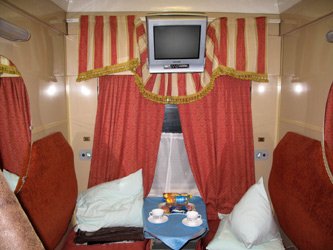
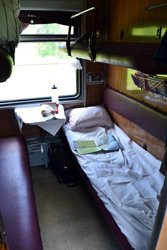
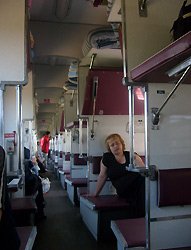
Life on board Russian trains
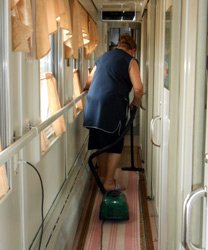
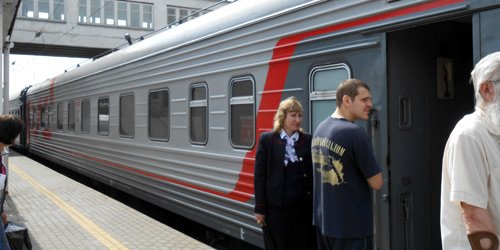
Whichever class of travel you choose, each coach is looked after by a pair of attendants called a 'provodnik' (male) or 'provodnitsa' (female). The provodnik will check your ticket at the door to the sleeper when you board. Shortly after departure, the provodnik will come round to take your ticket and the small bedding fee (less than £1). You may be asked if you would like a glass of black Russian tea ('chai') - this costs about 15p. Bedding (two sheets, pillowcase and towel) is then handed out in sealed packs - blankets and mattresses will already be stacked in your compartment. After a few journeys, you will become quite proficient at making up your bed!
A samovar with unlimited free hot water is available at the end of the corridor - pack some tea or coffee, sugar, cuppa soups or water-based drinking chocolate and bring your own mug. Most long distance trains have a restaurant car serving drinks, snacks, and inexpensive full meals - reckon on less than £7 for two courses and a couple of bottles of beer.
Security. Are Russian trains safe for families or single women?
Yes! There is no need to worry unduly about security on Russian trains, even for families or women travelling alone. How do you think Russian families or solo women travel? By train, of course, like everyone else! Just use common sense as you would in a hotel, locking your door at night and not leaving valuables unattended in your compartment. In addition to the normal lock on the compartment door, 'Spalny Wagon' and 'kupé' compartments have a security latch which stops the door opening more than an inch or two, and which cannot be released from outside. There's also a safe place for your bags at night - if you have a bottom bunk, there is a metal box underneath the bunk which you can only get to by lifting up the bunk - in other words, for anyone to get to your bags, they will have to shift you off your bunk first..! Your provodniks will probably also lock the access doors at each end of the corridor at night to prevent unwanted guests. Men and women share the same compartments in Russia, but it's generally quite safe for women travelling alone. If you're a woman and find yourself in sharing with three men that make you uncomfortable, just ask the provodniks (carriage attendants) if they can move you.
European Rail Timetable & maps

 The
European Rail Timetable
(formerly the Thomas Cook European Timetable)
has train & ferry times for every country in Europe plus
currency & climate information. It is essential
for regular European train travellers and an inspiration for armchair
travellers. Published since 1873, it had just celebrated 140 years of
publication when Thomas Cook decided to pull the plug on their entire publishing
department, but the dedicated ex-Thomas Cook team set up a private venture and
resumed publication of the famous European Rail Timetable in March 2014.
You can buy it online at
www.amazon.co.uk (UK addresses) or
www.europeanrailtimetable.eu (shipping worldwide).
More information
on what the European Rail Timetable contains.
The
European Rail Timetable
(formerly the Thomas Cook European Timetable)
has train & ferry times for every country in Europe plus
currency & climate information. It is essential
for regular European train travellers and an inspiration for armchair
travellers. Published since 1873, it had just celebrated 140 years of
publication when Thomas Cook decided to pull the plug on their entire publishing
department, but the dedicated ex-Thomas Cook team set up a private venture and
resumed publication of the famous European Rail Timetable in March 2014.
You can buy it online at
www.amazon.co.uk (UK addresses) or
www.europeanrailtimetable.eu (shipping worldwide).
More information
on what the European Rail Timetable contains.
Rail Map Europe is the map I recommend, covering all of Europe from Portugal in the west to Moscow & Istanbul in the east, Finland in the north to Sicily & Athens in the south. Scenic routes & high-speed lines are highlighted. See an extract from the map. Buy online at www.europeanrailtimetable.eu (shipping worldwide) or at www.amazon.co.uk (UK addresses).
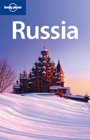
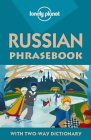
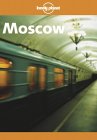
You should take a good guidebook,
and a phrasebook can help too. I think the Lonely Planets
and Rough Guides are about the best there are for the
independent traveller, and you will not regret buying one of
these!
Click the images to buy the book from Amazon.co.uk

Hotels in Moscow & Russia

 Backpacker
hostels
Backpacker
hostels
www.hostelworld.com: If you're on a tight budget, don't forget about backpacker hostels. Hostelworld offers online booking of cheap private rooms or dorm beds in backpacker hostels in most cities at rock-bottom prices.
Travel insurance & VPN
|
|
|
|
|


Always take out travel insurance
You should have travel insurance with at least £1m or preferably £5m medical cover from a reliable insurer. It should cover trip cancellation and loss of cash & belongings up to a reasonable limit. An annual policy is usually cheapest even for just 2 or 3 trips a year, I have an annual policy with Staysure.co.uk myself. Just don't expect travel insurance to bail you out of every missed connection, see the advice on missed connections here. Here are some suggested insurers, I get a little commission if you buy through these links, feedback always welcome.
 www.staysure.co.uk
offers enhanced Covid-19 protection and gets 4.7 out of 5 on
Trustpilot.
www.staysure.co.uk
offers enhanced Covid-19 protection and gets 4.7 out of 5 on
Trustpilot.
www.columbusdirect.com is also a well-know brand.
 www.staysure.com/ie if you live in Ireland.
 If you live in the USA try
Travel Guard USA.
If you live in the USA try
Travel Guard USA.
|
|

Get an eSIM with mobile data package
Don't rely on WiFi, download an eSIM with a European mobile data package and stay connected. Most newer mobile phones can download a virtual SIM including iPhone 11 & later, see device compatibility list. There's no need to buy a physical SIM card! Maya.net is a reliable eSIM data retailer with a 4.5 out of 5 Trustpilot rating and a range of packages including unlimited data.
|
|

Get a VPN for safe browsing. Why you need a VPN
When travelling you may use free public WiFi which is often insecure. A VPN encrypts your connection so it's always secure, even on unsecured WiFi. It also means you can select the geographic location of the IP address you browse with, to get around geoblocking which a surprising number of websites apply. See VPNs & why you need one explained. ExpressVPN is a best buy with a 4.7 out of 5 Trustpilot ranking which I use myself - I've signed up as an ExpressVPN affiliate, and if you go with expressvpn.com using this link you should see a special deal, 3 months free with an annual subscription. I also get some commission to help support this site.
|
|


Get a Curve card for foreign travel
Most banks give you a poor exchange rate then add a foreign transaction fee on top. A Curve MasterCard means no foreign transaction fees and gives you the mid-market exchange rate, at least up to a certain limit, £500 per month as I write this. The money you spend on your Curve card goes straight onto one of your existing debit or credit cards. And you can get a Curve card for free.
How it works: 1. Download the Curve app for iPhone or Android. 2. Enter your details & they'll send you a Curve MasterCard - they send to the UK and most European addresses. 3. Link your existing credit & debit cards to the app, you can link up to two cards with the free version of Curve, I link my normal debit card and my normal credit card. 4. Now use the Curve MasterCard to buy things online or in person or take cash from ATMs, exactly like a normal MasterCard. Curve does the currency conversion and puts the balance in your own currency onto whichever debit or credit card is currently selected in the Curve app. You can even change your mind about which card it goes onto, within 14 days of the transaction.
I have a Curve Blue card myself, it means I can buy a coffee on a foreign station on a card without being stung by fees and lousy exchange rates, just by tapping the Curve card on their card reader. The money goes through Curve to my normal debit card and is taken directly from my account (in fact I have the Curve card set up as payment card on Apple Pay on my iPhone, so can double-click my phone, let it do Face ID then tap the reader with the phone - even easier than getting a card out). I get a little commission if you sign up to Curve, but I recommend it here because I think it's great. See details, download the app and get a Curve card, they'll give you £5 cashback through that link.
|
|

Carry an Anker powerbank
Tickets, reservations, hotel bookings and Interrail or Eurail passes are often now held on your mobile phone. You daren't let it run out of power, and you can't always rely on the phone's internal battery or on being near a power outlet. I always carry an Anker powerbank which can recharge my phone several times over. Buy from Amazon.co.uk or buy from Amazon.com.
Touring cities? Use hill walking shoes!
One of the best things I've done is swap my normal shoes for hill-walking shoes, in my case from Scarpa. They're intended for hiking across the Pennines not wandering around Florence, but the support and cushioning for hiking works equally well when you're on your feet all day exploring foreign cities. My feet used to give out first and limit my day, now the rest of me gives up before they do!